Early Childhood Changing Tables Buying Guide
Choosing the right changing table is essential for maintaining a safe, sanitary, and efficient childcare environment. Whether you're furnishing a daycare center, preschool, nursery, infant classroom, church childcare room, or early learning center, the right changing station helps streamline diapering routines while supporting child safety and hygiene.
This guide will help you compare changing table types, safety features, storage options, accessories, and ADA-compliant solutions to find the best changing table for your facility.

What to Consider When Buying a Changing Table
Before selecting a changing table, consider the following:
- Type of changing table
- Size and weight capacity
- Built-in storage options
- Accessibility requirements
- Hygiene and sanitation features
- Safety rails and straps
- Mobility and portability
- Available accessories
Types of Early Childhood Changing Tables
There are several types of changing tables designed to meet the unique needs of childcare facilities.
Standard Changing Tables
Traditional changing tables are the most common option for daycare centers and infant rooms.
Features often include:
- Comfortable changing surface
- Protective changing pad
- Easy-to-clean materials
- Durable construction
- Convenient working height, typically between 36" and 43"
These tables provide a dedicated space for diaper changes while helping keep classrooms clean and organized.
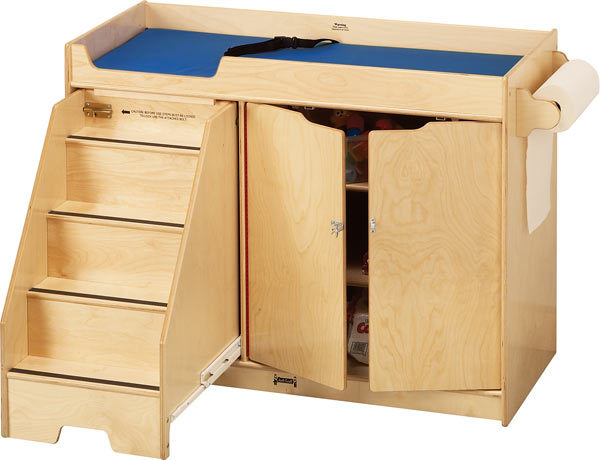
Changing Tables with Stairs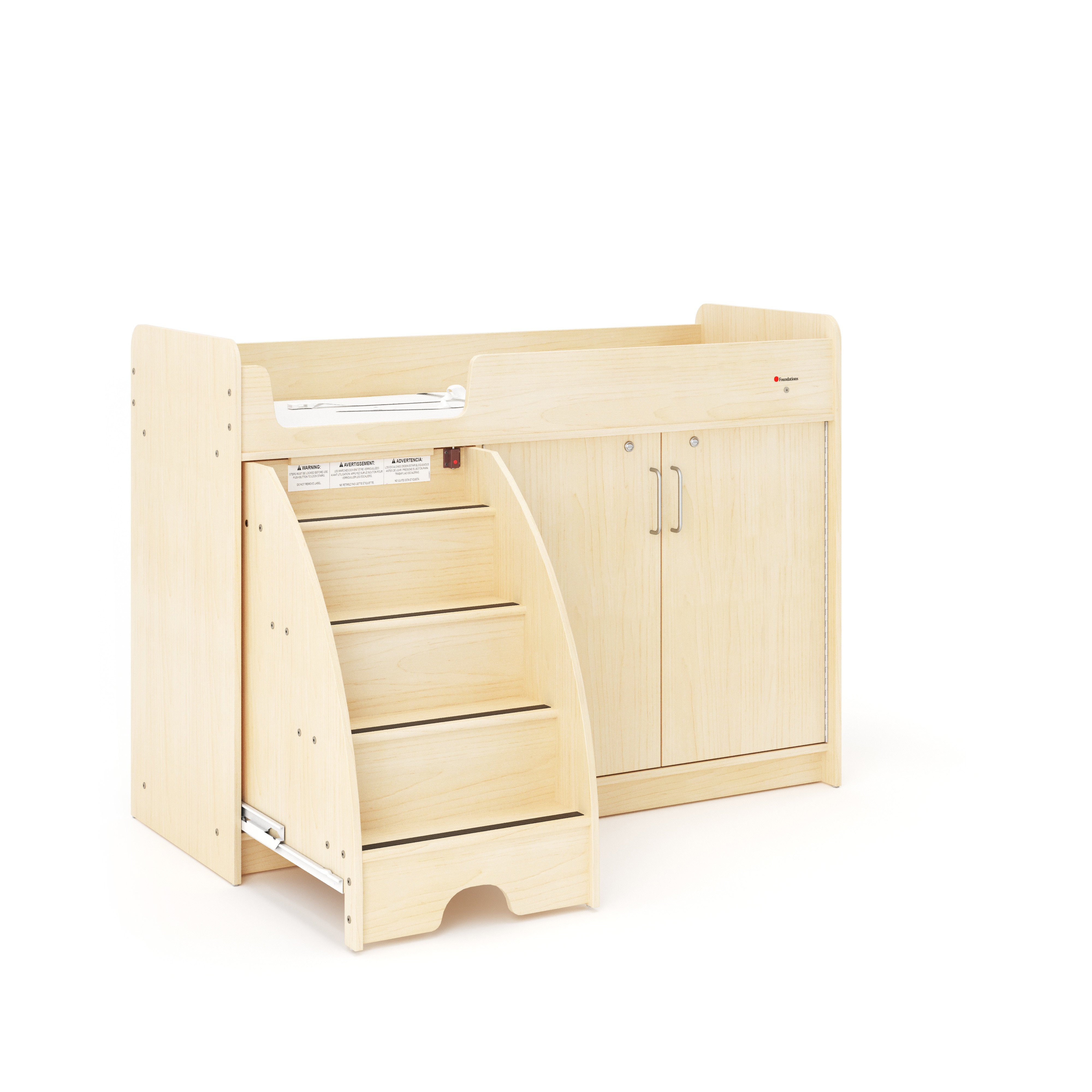
Changing tables with built-in stairs encourage independence and reduce lifting for caregivers.
Benefits include:
- Allows toddlers and walkers to climb safely onto the table
- Reduces strain on staff
- Encourages self-help skills
- Promotes confidence and participation
These models are especially popular in toddler classrooms and early learning environments.
Changing Tables with Storage
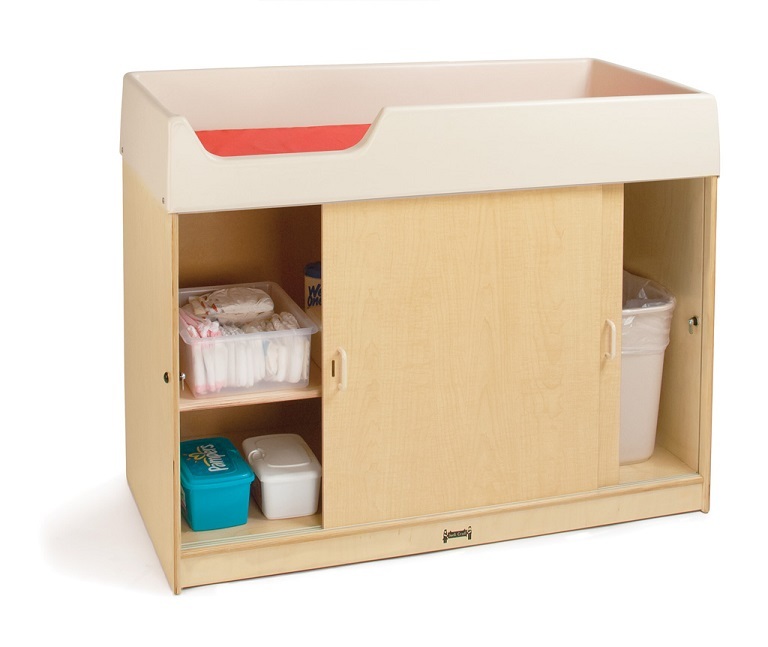
Integrated storage helps caregivers keep essential supplies within reach while maintaining supervision of children at all times.
Storage options may include:
- Drawers
- Cabinets
- Open shelving
- Combination storage systems
Built-in storage is ideal for organizing:
- Diapers
- Wipes
- Gloves
- Creams and ointments
- Extra clothing
- Cleaning supplies
For maximum safety, choose lockable storage for items that should remain out of children's reach.
Changing Tables with Built-In Sinks
Changing stations with integrated sinks combine convenience and hygiene in one solution.
Advantages include:
- Immediate handwashing after diaper changes
- Improved sanitation practices
- Simplified cleanup
- Greater efficiency for caregivers
These units are especially valuable in childcare centers focused on maintaining strict health and safety standards.
Wall-Mounted Changing Tables
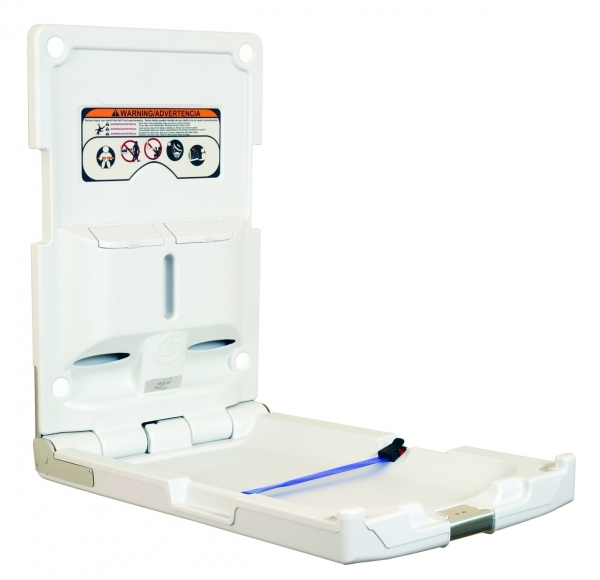
Wall-mounted changing stations are an excellent space-saving solution for smaller classrooms, restrooms, and childcare facilities.
Benefits include:
- Saves valuable floor space
- Folds away when not in use
- Ideal for compact rooms
- Available in ADA-compliant designs
- Suitable for infants, children, and some special needs applications
Many commercial wall-mounted changing stations offer high weight capacities, but always verify manufacturer specifications before purchasing.
Important: Children should always be secured properly and never left unattended during diaper changes.
Choosing the Right Changing Pad
The changing pad is an important part of every changing station.
Contoured Changing Pads
Contoured pads feature raised sides that help keep infants centered on the changing surface.
Benefits include:
- Additional security
- Reduced rolling risk
- Increased caregiver confidence
Flat Changing Pads
Flat pads provide a simple, versatile changing surface and are often used in commercial childcare settings.
Regardless of style, all changing pads should include safety straps and easy-to-clean surfaces.
Essential Changing Table Accessories
The right changing table accessories improve efficiency, hygiene, and safety throughout the day.

Storage Solutions
Having supplies within arm's reach helps caregivers maintain constant supervision during diaper changes.
Consider:
- Lockable cabinets
- Storage shelves
- Drawer organizers
- Supply caddies
Proper storage minimizes disruptions while improving safety and organization.
Portable Sinks
Portable sinks are a valuable addition when permanent plumbing is unavailable.
Benefits include:
- Encourages proper handwashing
- Supports health and sanitation protocols
- Internal plumbing systems
- Available with built-in water heaters
These solutions are particularly useful in classrooms, temporary childcare spaces, and church nurseries.
Stairs and Step Stools
For toddler classrooms, stairs and step stools help children participate more independently.
Advantages include:
- Encourages self-sufficiency
- Reduces caregiver lifting
- Supports developmental growth
- Improves transition routines
Many facilities choose changing tables with integrated stairs for added convenience and safety.
Safety Straps
Safety straps are one of the most important components of a changing station.
They help:
- Prevent rolling
- Reduce fall risks
- Keep children secure during diaper changes
- Improve caregiver confidence
Most commercial changing tables include safety straps, but replacement straps are available if needed.
Disposable Liners, Pads & Paper Rolls
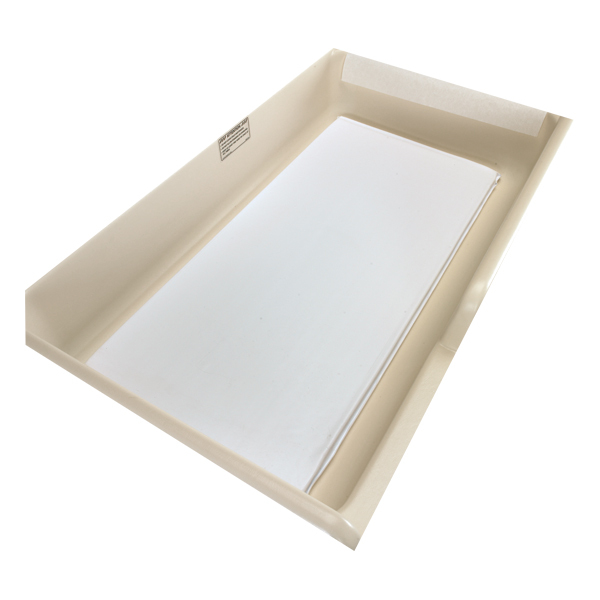
Maintaining a sanitary changing surface is critical in childcare environments.
Disposable changing accessories help:
- Reduce cross-contamination
- Improve cleanliness
- Simplify daily maintenance
- Support health and licensing requirements
Many childcare facilities use disposable liners or paper rolls between every diaper change.
Changing Table Safety Considerations
Safety should always be the top priority when selecting and using changing tables.
Secure Storage
Store supplies safely by:
- Keeping hazardous items out of reach
- Using lockable cabinets
- Placing frequently used items within arm's reach
- Maintaining continuous supervision
- Caregivers should never leave a child unattended to retrieve supplies.
Stability and Weight Capacity
Choose changing tables designed for commercial childcare use.
Look for:
- Wide, stable bases
- Durable construction
- Commercial-grade materials
- Appropriate weight ratings
Always follow manufacturer weight recommendations and discontinue use once limits are exceeded.
Guardrails and Protective Barriers
Safety barriers help prevent falls and improve security during diaper changes.
Recommended features include:
- Raised safety rails
- Protective sides on all four edges
- Secure safety straps
- Non-slip changing surfaces
Many childcare professionals recommend guardrails of at least 2 inches on all sides for added protection.
Casters and Mobility
Mobile changing tables offer flexibility but must be used safely.
When selecting a mobile changing table:
- Ensure all casters lock securely
- Engage wheel locks during every use
- Verify stability before placing a child on the table
- Inspect wheels regularly for wear
Locking casters help prevent unwanted movement and reduce safety risks.
Finding the Best Changing Table for Your Childcare Facility
The ideal changing table balances safety, hygiene, storage, accessibility, and durability. Whether you need a traditional changing station, a wall-mounted changing table, a changing table with stairs, or a complete diaper changing center with sink and storage, Today's Classroom offers solutions designed specifically for daycare centers, preschools, nurseries, and early childhood environments.
Need help selecting the right changing table for your facility? Contact our furniture specialists for personalized recommendations and expert guidance.