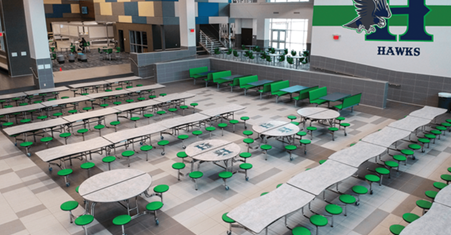

Choosing the right cafeteria tables is an important investment for any school, university, daycare, or multi-purpose dining facility. The best cafeteria tables provide durability, flexibility, comfort, and efficient use of space while supporting daily student traffic for years to come.
This guide will help you compare cafeteria table styles, materials, seating options, sizes, and configurations so you can select the best solution for your cafeteria, lunchroom, commons area, or multi-purpose room.
What to Consider When Buying Cafeteria Tables
Before purchasing cafeteria tables, consider the following factors:
- Frame construction and finish
- Tabletop core material
- Edge protection options
- Attached vs. unattached seating
- Table and seat heights
- Cafeteria layout requirements
- Mobility and storage needs
- ADA accessibility requirements
Frame Style & Finish
The frame provides the structural strength of your cafeteria table and is one of the most important factors in long-term durability.
Steel Frames
Most cafeteria tables feature a tubular steel frame designed for daily commercial use. Steel frame thickness is measured by gauge; the lower the gauge number, the stronger and more durable the frame.
Chrome Finish
Chrome frames provide a clean, professional appearance and offer excellent resistance to scratches, chipping, and corrosion. They are often preferred in high-traffic environments where long-term durability is a priority.
Powder-Coated Finish
Powder-coated frames provide a durable, cost-effective alternative to chrome while offering additional color options. These finishes are designed to withstand daily cafeteria use and help coordinate with school colors and décor.
Cafeteria Tabletop Materials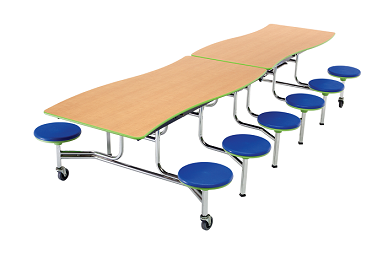
The tabletop core affects durability, weight, and overall performance.
Particleboard Core
Particleboard is the most common cafeteria tabletop material because it provides excellent strength while remaining cost-effective. Most particleboard tops are protected with a high-pressure laminate surface for easy cleaning and everyday durability.
Plywood Core
Plywood core tables offer increased strength and moisture resistance, making them ideal for high-use cafeterias and multipurpose spaces. Although typically more expensive than particleboard, plywood provides exceptional long-term durability.
High-Pressure Laminate Surfaces
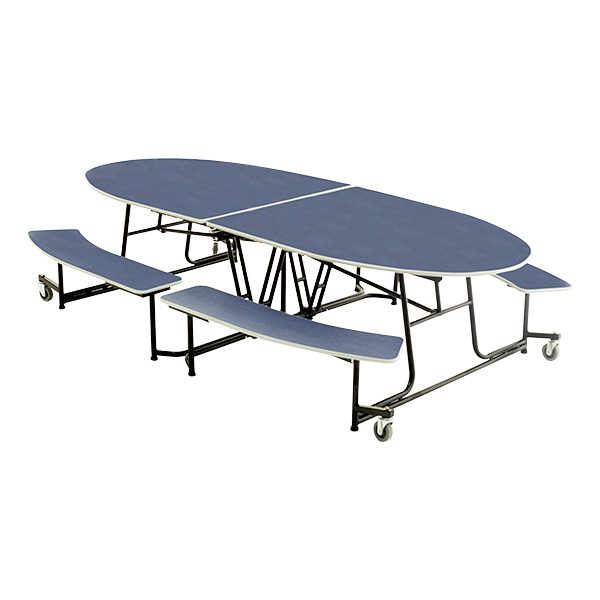
Most cafeteria tables feature high-pressure laminate surfaces that resist stains, scratches, and daily wear. Laminate tops are easy to clean and available in a wide variety of colors and finishes.
Edge Styles
The table edge helps protect both the tabletop and users while extending the life of the table.
Vinyl Edge
Vinyl edging provides a durable, economical solution that protects the tabletop from everyday impacts and wear.
Epoxy Edge
Epoxy edges offer superior durability and moisture protection. They resist chipping, cracking, and separation, making them an excellent choice for elementary schools and high-traffic environments.
Seating Options
Cafeteria tables are available with attached seating, unattached seating, or ADA-accessible configurations.
Bench Seating
Bench-style cafeteria tables maximize seating flexibility and can often accommodate more students. They are especially popular in elementary schools and daycare settings where flexible seating arrangements are beneficial.
Stool Seating
Stool-style cafeteria tables provide designated seating positions with individual entry points, making them easy to access and helping maintain organized seating arrangements. They are commonly used in middle schools, high schools, and larger cafeterias.
Some cafeteria tables are also available with mixed bench & stool style seating.
Unattached Seating
Tables without attached seating offer maximum flexibility and allow schools to use existing chairs or create customized seating layouts. They are also a practical option when accommodating varying user needs.
Booth Seating
Booth seating provides a comfortable, space-efficient alternative to traditional cafeteria tables and is often used in common areas, cafés, break rooms, and collaborative dining spaces. Booths create a more inviting atmosphere while helping define seating areas and improve traffic flow throughout the room.
Table Heights

Most school cafeteria tables are available in 25", 27" and 29" heights to accomodate different age groups and seating needs. A 29" cafeteria table is the standard choice for middle schools, high schools, colleges, and adult dining areas and is typically paired with a 17" high bench or stool.
For elementary schools or younger students, a 27" high cafeteria table with a 15" high bench or stool often provides a more comfortable fit. This is the most common height for younger learners, however, we can also offer a 25" high cafeteria table paired with a 13" high seat, making them ideal for preschool, daycare and other early childhood environments.
For cafés, student commons, and collaborative dining spaces, café height tables offer a more modern seating option when paired with café stools or high-top seating.
Cafeteria Layout & Spacing
Proper table spacing improves traffic flow, accessibility, and safety.

As a general guideline:
- Maintain at least 48" of aisle space between tables
- Keep exits and doorways unobstructed
- Allow adequate circulation space for students, staff, and wheelchairs
When planning your layout, consider both daily lunch service and any additional activities hosted in the space.
Cafeteria Table Configurations
Different table styles can help maximize functionality depending on how the space is used.
Mobile Folding Cafeteria Tables
Mobile folding tables feature integrated casters and folding mechanisms for easy transport, storage, cleaning, and room reconfiguration. These are among the most popular options for schools and multipurpose facilities.
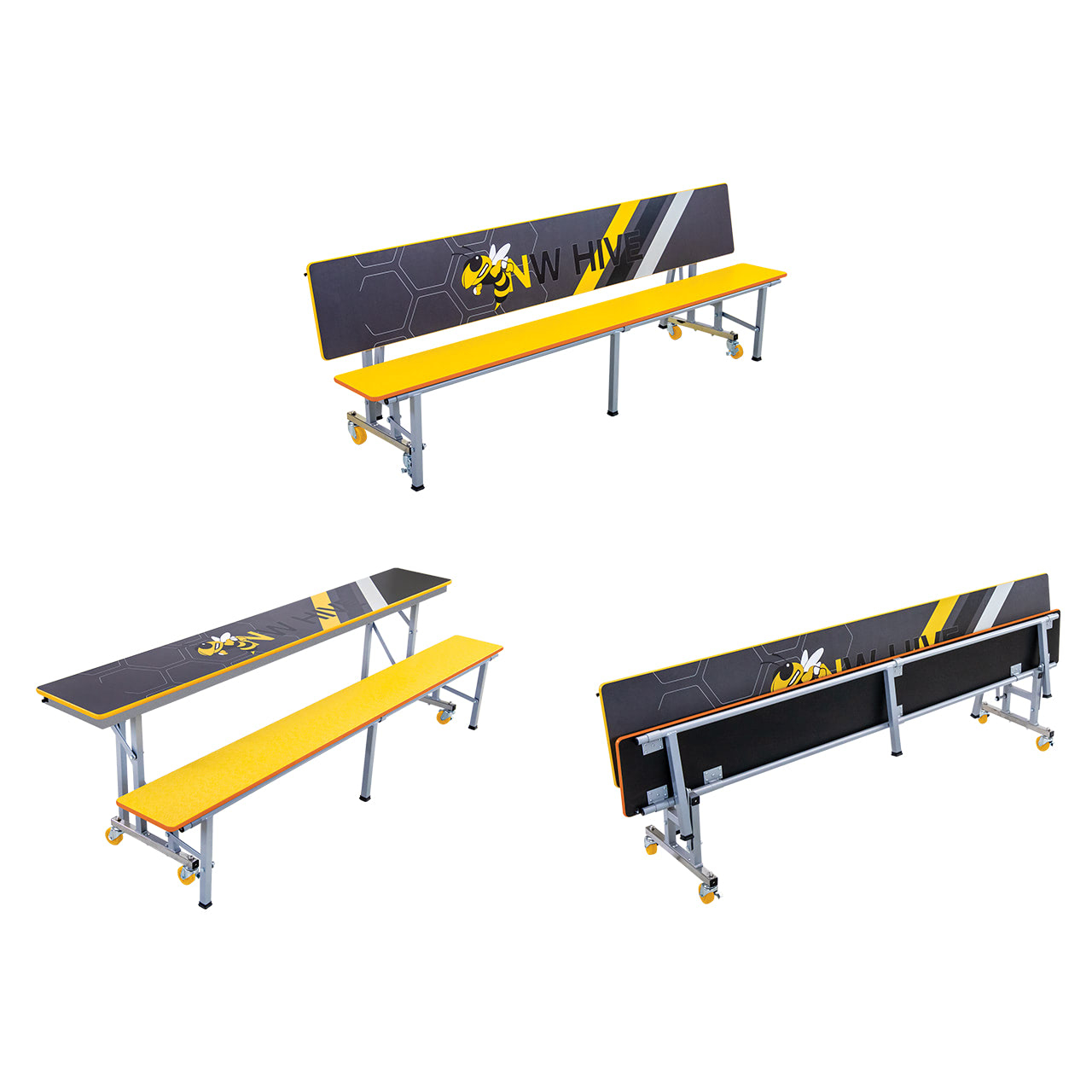
Convertible Bench Cafeteria Tables
Convertible bench models transform from cafeteria tables into benches, making them ideal for schools that use their dining spaces for assemblies, performances, and events.
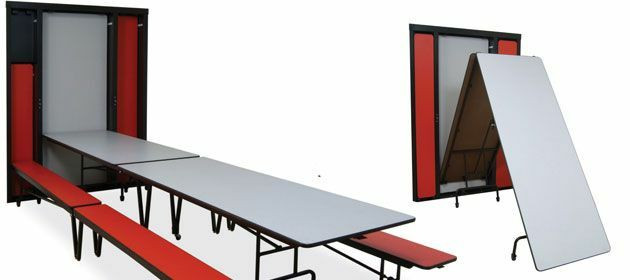 Wall-Mounted Cafeteria Tables
Wall-mounted cafeteria tables fold neatly against the wall when not in use, maximizing floor space and simplifying cleaning. These are especially useful in multipurpose rooms where flexibility is essential.
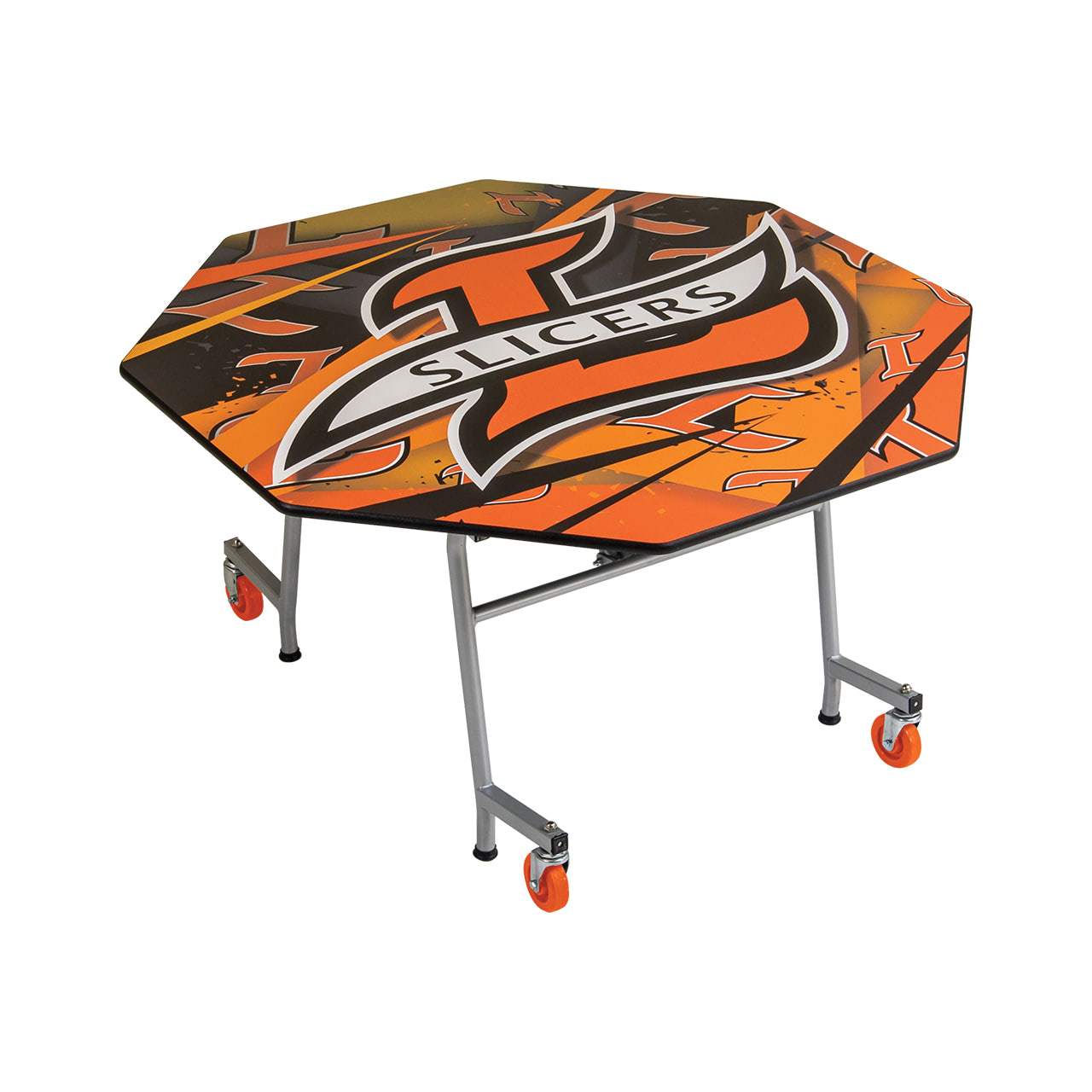
Shape Cafeteria Tables
Beyond traditional rectangular layouts, cafeteria tables are available in round, octagonal, elliptical, and other collaborative shapes. These options can improve traffic flow and create more engaging seating arrangements.
Floor-Mounted Cafeteria Tables
Floor-mounted cafeteria tables are permanently anchored to the floor, making them an excellent choice for high-traffic dining areas where durability and security are top priorities. Because they remain in a fixed location, these tables help maintain organized seating layouts, recuded movement and wear and simplify daily supervision in schools, correctional facilities, and institutional settings.
ADA Cafeteria Tables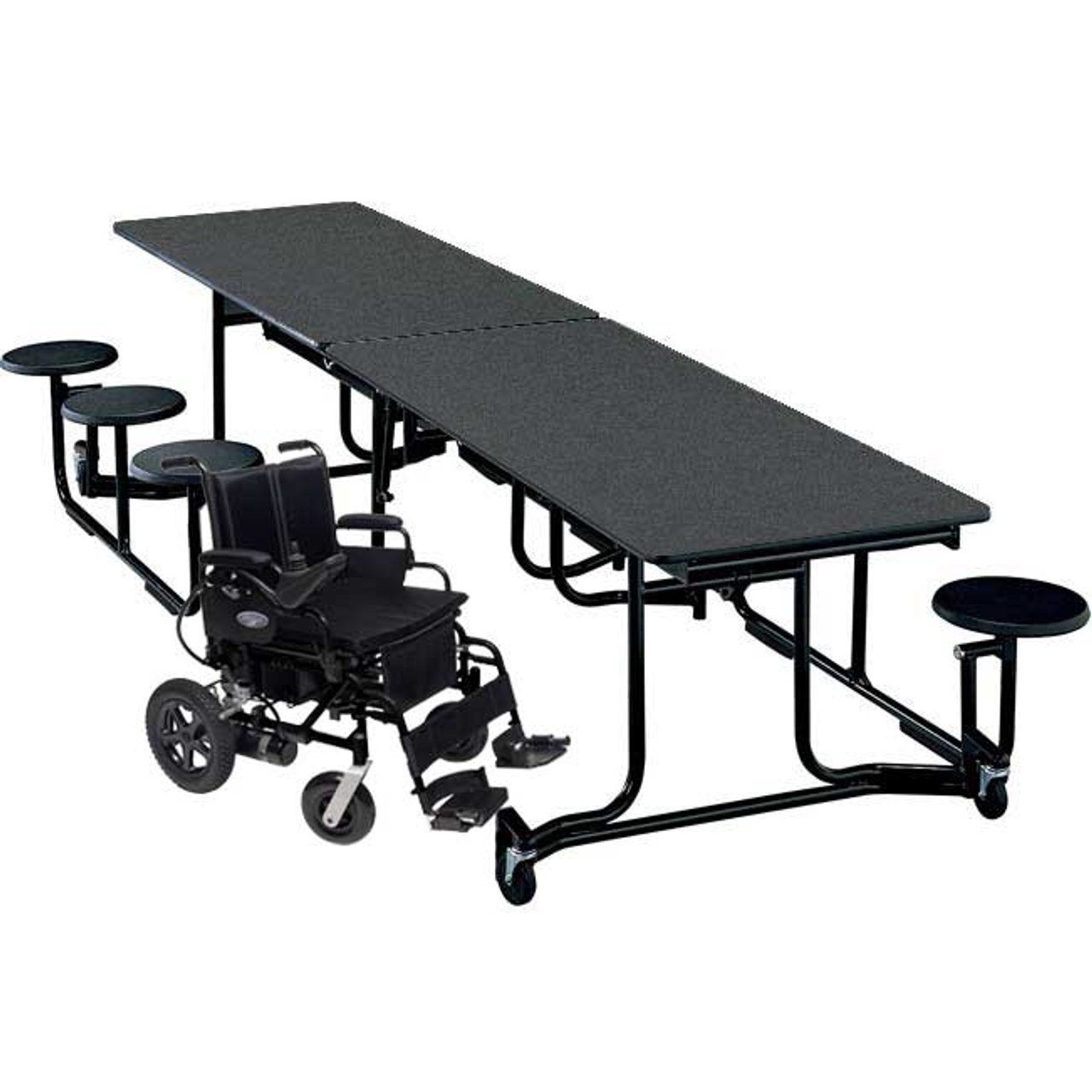
ADA-compliant cafeteria tables provide accessible seating for wheelchair users while integrating seamlessly with other cafeteria furniture. Many models are mobile, allowing schools to adapt layouts as needed.
Café & Cafeteria Accessories
The right accessories can improve organization, efficiency, and the overall dining experience in your cafeteria, café, or commons area. Whether you're creating a traditional lunchroom or a modern café-style space, these accessories help maximize functionality while supporting the needs of students, staff, and guests.
Cafeteria Benches
Cafeteria benches provide flexible seating solutions for dining areas, multipurpose rooms, and common spaces. Available in a variety of lengths, styles, and materials, benches can be used alongside cafeteria tables or as standalone seating throughout a facility.
Café Stools
Café stools are a popular choice for high-top tables, café seating areas, student commons, and collaborative spaces. Available in a variety of heights, materials, and styles, they help create a more modern, relaxed atmosphere while maximizing seating capacity.
Condiment Cabinets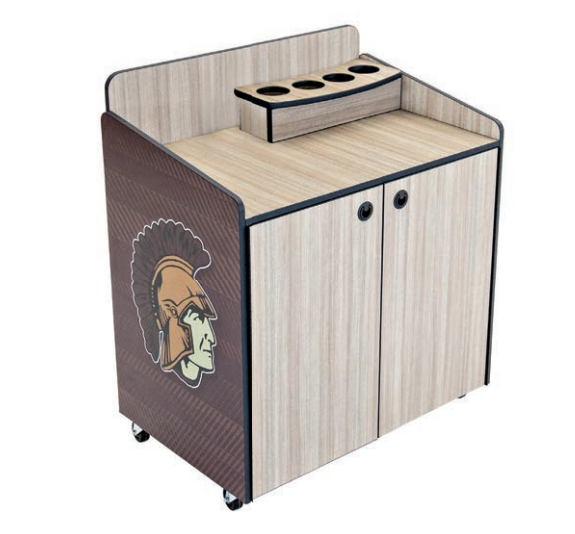
Condiment cabinets help organize utensils, napkins, straws, condiments, and other dining essentials in self-service areas. These storage solutions improve traffic flow, reduce clutter, and create a cleaner, more efficient cafeteria environment.
Cafeteria Trays
Cafeteria trays are designed to withstand daily use while making meal service more efficient for students and staff. Available in a variety of sizes, materials, and compartment configurations, trays help keep food organized and simplify cleanup after meals.
Finding the Right Cafeteria Tables for Your Space
The best cafeteria tables balance durability, seating capacity, accessibility, and flexibility. Whether you're furnishing a school cafeteria, daycare, church, community center, or multipurpose facility, selecting the right table style, seating option, and configuration will help create a comfortable and efficient dining environment for years to come.
Need help selecting the right cafeteria tables for your space? Contact our school furniture specialists for expert recommendations and personalized assistance.