
Portable Stage Buying Guide for Schools, Churches & Event Spaces
Portable stages are a versatile solution for schools, churches, auditoriums, community centers, and event venues that need flexible performance or presentation space. Whether you are hosting concerts, assemblies, ceremonies, theatrical productions, choir performances, or public speaking events, choosing the right stage platform is essential for safety, appearance, mobility, and audience visibility.
Today’s Classroom offers a wide variety of portable stages and modular stage platforms designed for educational and professional environments. Before purchasing a stage system, consider the following key features:
- Platform Material
- Platform Surface
- Stage Size
- Stage Height
- Mobile vs. Portable Designs
- Storage & Transportation
- Stage Accessories
Portable stages are raised platform systems designed to create temporary or semi-permanent performance areas. Unlike permanent stages, portable stage platforms can be moved, stored, expanded, or reconfigured as needed.
Portable stages are commonly used for:
- School performances
- Choir risers
- Graduation ceremonies
- Band concerts
- Church events
- Public speaking events
- Theater productions
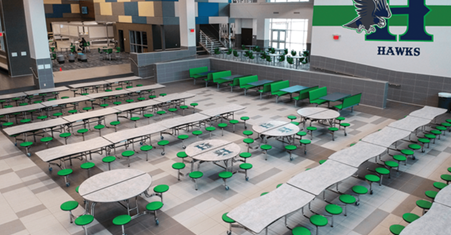
- Cafeteria stages
- Multipurpose rooms
Many modular stage systems can also be connected together to create larger performance spaces.
Platform Material
The platform core is one of the most important factors affecting stage durability and longevity.
Plywood Stage Platforms
Most portable stages are constructed with a solid plywood core because of its strength and long-term durability. Plywood stage platforms are designed to withstand years of repeated setup, storage, and performance use.
Benefits of plywood stage platforms include:
- Excellent structural strength
- Long-lasting durability
- Stable performance surface
- Resistance to warping under heavy use
Most plywood platforms are finished with either:
- Hardboard laminate surfaces
- Commercial-grade carpeted surfaces
Platform Surface Options
The surface material of your stage affects appearance, acoustics, maintenance, and performance functionality.
Hardboard Stage Surfaces
Hardboard laminate surfaces provide a smooth, durable finish that is easy to clean and maintain.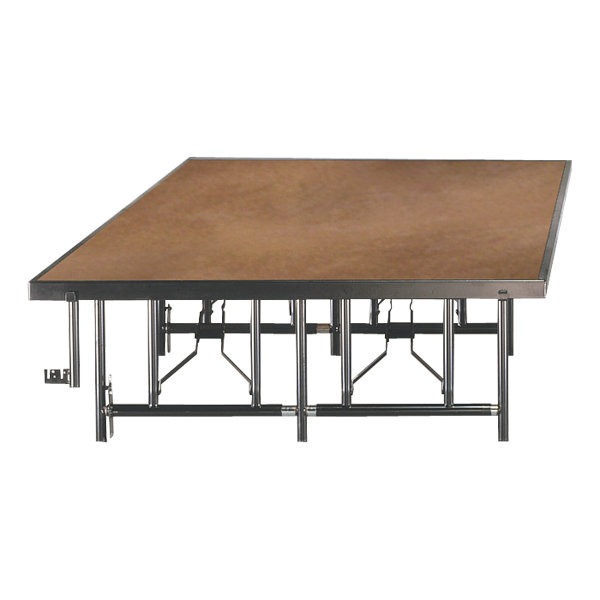
Hardboard stages are ideal for:
- Multipurpose school stages
- Dance performances
- Ceremonies
- Cafeteria use
- General assembly spaces
Benefits of hardboard surfaces include:
- Easy cleaning
- Durable finish
- Professional appearance
- Lower overall cost
Carpeted Stage Surfaces
Carpeted stage platforms feature the same durable plywood core but include a commercial-grade carpet covering available in multiple colors.
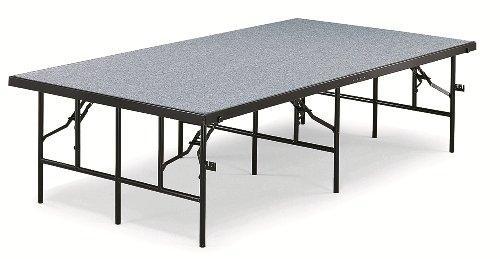
Carpeted stages are popular because they:
- Improve sound absorption
- Reduce noise during movement
- Create a softer appearance
- Add traction for performers
These stages are especially beneficial for:
- Choir performances
- Churches
- Speech presentations
- Auditorium settings
- Music performances
Although carpeted platforms are typically more expensive than hardboard stages, many schools and churches prefer them for their acoustic benefits and finished appearance.
Choosing the Right Stage Size
The ideal stage size depends on your room dimensions, audience size, and intended use.
Room Size & Audience Visibility
Larger rooms often require larger or taller stages to ensure audience members can clearly see performers and presenters.
When selecting stage dimensions, consider:
- Number of performers
- Seating layout
- Viewing distance
- Event type
- Available floor space
Ceiling Height
Ceiling clearance is another important consideration. Rooms with lower ceilings may require lower stage heights to provide adequate headroom for performers, lighting, and equipment.
Performer Age & Height
The age and height of performers can also influence stage selection.
For example:
- Children’s choirs often benefit from taller stage heights so all performers remain visible
- Adult performances may require lower platforms depending on room layout
Choosing the proper stage height improves visibility and enhances audience experience.
Mobile Stages
Mobile stages include built-in wheels that allow the platforms to fold, transport, and store more easily.
Benefits of mobile stages include:
- Faster setup and teardown
- Easier transportation
- Simplified storage
- Reduced labor requirements
Mobile stages are ideal for:
- Schools with multipurpose spaces
- Cafeterias converting into stages
- Churches with flexible layouts
- Facilities frequently hosting events
Although mobile stage systems are typically more expensive than stationary platforms, they offer significant convenience for organizations regularly moving or storing stages.
Portable Stages
Portable stages can also fold and store compactly, but unlike mobile stages, they do not include built-in transport wheels.
To move portable stage platforms, a separate transport caddy is typically required.
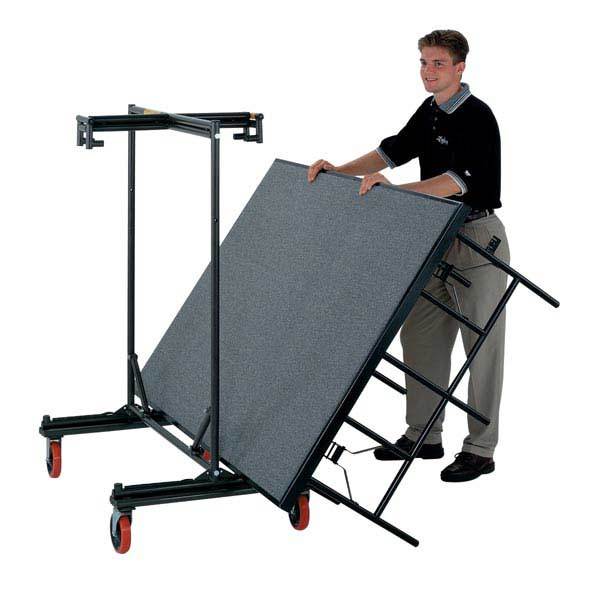
Portable stages are often:
- More budget-friendly
- Easier to customize
- Suitable for occasional use
If your stage system will only be moved occasionally, portable platforms with a storage caddy may provide a more cost-effective solution.
Stage Accessories
Stage accessories can improve safety, appearance, accessibility, and transportation.
Stage Stairs
Stage stairs make elevated platforms safer and easier to access.
If your stage platform is higher than 8 inches, stairs are highly recommended to reduce the risk of trips and falls.
For performances involving frequent entrances and exits, placing stairs at both ends of the stage can improve traffic flow and safety.
Many stage stair systems also include handrails for additional support.
Guardrails
Guardrails help prevent accidental falls, especially for:
- Younger students
- Choir risers
- Elevated stage setups
- Large group performances
Safety rails are strongly recommended for schools and children’s performance environments.
Stage Caddies
Stage caddies are specifically designed to:
- Store platforms
- Transport stage sections
- Protect stage components during movement
A transport caddy is generally not necessary for fully mobile stages with integrated wheels.
Stage Skirting
Stage skirting creates a polished, professional appearance by concealing stage legs and understructure.
Skirting is commonly used for:
- School ceremonies
- Graduation events
- Church performances
- Professional presentations
- Banquets and formal events
Stage skirting is available in several colors and styles, including:
- Box pleat
- Shirred pleat
Depending on stage placement, skirting may be needed on:
- Three sides
- All four sides
Most skirting attaches using hook-and-loop fasteners or Velcro systems.
Choosing the Best Portable Stage
The best portable stage system depends on:
- Room size
- Audience capacity
- Frequency of setup and storage
- Performer age group
- Desired mobility
- Budget
- Acoustic needs
Whether you need a modular school stage, portable choir risers, or a mobile performance platform, selecting the right stage system can improve both functionality and presentation quality for years to come.
Browse our full collection of portable stages and performance platforms to find the best solution for your facility.
If you need help choosing the right portable stage, our team is happy to help. Contact us today for expert recommendations.